
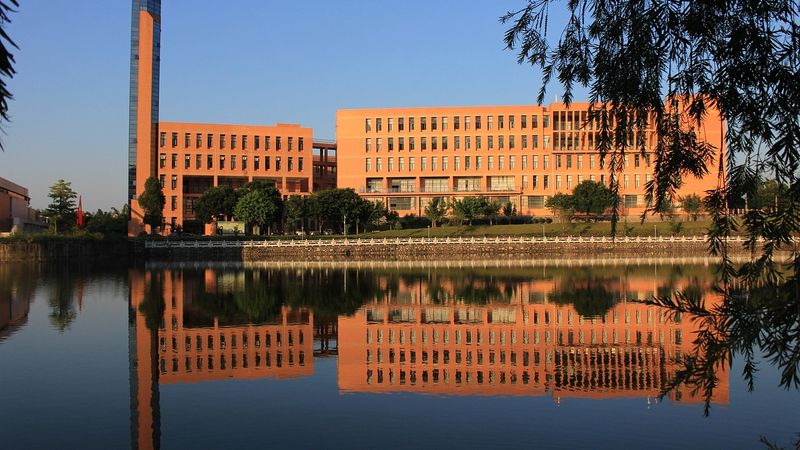
Jakarta, Kartunet.com – Accessibility is still not commonplace in Indonesia, even within its educational institutions. At the university level, accessibility often receives insufficient attention. Yet, to become a campus that is accessible and comfortable for everyone, including people with disabilities, only minor modifications are needed in certain areas of the campus.
The first and relatively easy modification is to cover all open drains and culverts on campus with iron grates. Open drainage systems are extremely dangerous for visually impaired individuals and wheelchair users. While a visually impaired person can typically identify open drains or culverts with their white cane, there's always a risk of them losing concentration and falling in. For wheelchair users, drains make passage difficult and often require assistance from others to lift the wheelchair over them.
After covering the drainage systems, another modification campus authorities can implement is to convert small outdoor staircases into ramps. These steps can sometimes make it difficult for wheelchair users to move independently. When encountering them, they need to ask for help from those around them to lift the wheelchair over the steps. If each step is replaced with a ramp, they can move between buildings independently.
Furthermore, it is also necessary for every staircase between floors inside buildings to be equipped with railings. These railings can provide support for visually impaired individuals when climbing stairs, eliminating the worry of falling. For physically disabled individuals who can still use crutches, the railings can serve as a support when ascending stairs. Additionally, each step can be fitted with a textured strip and contrasting colors. This strip helps totally blind individuals feel the change in steps with their feet and can be recognized by low vision individuals as the boundary of each step.
Other small changes can be made by providing plenty of written signs indicating directions to places, names of locations, and other areas. These signs are beneficial for hearing-impaired individuals, so they don't have to struggle asking people for directions when they want to go somewhere. Additionally, Braille labels should be affixed next to the door of each room in the building, indicating the classroom code. These small labels are extremely useful for visually impaired individuals to avoid getting lost when entering a classroom.
Moving outside the campus buildings, if the campus uses buses for inter-faculty transportation, audio and text notifications can also be added for every bus stop. These notifications will make it easier for visually impaired and hearing-impaired individuals when they want to alight at a specific stop. Without such notifications, the chance of them getting off at the wrong stop is very high.
Beyond changes to physical facilities, minor policy modifications can also be implemented by campus authorities. For instance, if the campus identifies students who are physically disabled or wheelchair users, they would face immense difficulty moving to classes on the second floor and beyond. If a building does not have an elevator, a policy can be established to arrange all classes taken by these students to be held in ground-floor classrooms. This is a highly feasible modification for the campus and greatly simplifies things for wheelchair-using students.
Furthermore, in the library, a policy can be implemented to provide e-book versions of existing book collections. These e-books can assist visually impaired students who are unable to access printed books. Equipped with screen-reading computers in the library, visually impaired students can independently access the library's book collection without relying on sighted or non-visually impaired individuals.
So, do these various measures become a burden for the campus? Objectively speaking, these efforts to ensure accessibility not only benefit students with disabilities but also make students in general feel more comfortable. For example, the policy of covering drains and creating ramps on steps. These modifications can reduce the likelihood of people tripping on stairs or falling into drains due due to carelessness, right? The same applies to railings. Even people who have no difficulty walking will feel more comfortable holding onto a railing to avoid the possibility of falling.
Policies tailored for students with disabilities are not entirely exclusive. Adjusting the location of certain classes to the ground floor also benefits elderly lecturers who sometimes struggle with climbing too many stairs. At the very least, the campus wouldn't need to incur significant costs to build an elevator, especially for buildings with fewer than four floors. Furthermore, converting library books into e-books also serves as a digital archive for the library. This format is more enduring than physical forms, which can deteriorate over time. E-books can also be used by non-visually impaired students, eliminating the need to carry heavy books; a flash drive or CD will suffice.
It turns out that creating an accessible campus for students with disabilities is not difficult. It only requires minor modifications and an open mind to embrace differences. Of course, it would be more ideal if the campus had a study and service center for students with disabilities, Braille pathways, elevators in all buildings, or books in Braille format. However, in the short term, the modifications mentioned above are sufficient to accommodate the needs of students with disabilities without burdening the campus authorities. (DPM)
Editor: Muhammad Yesa Aravena